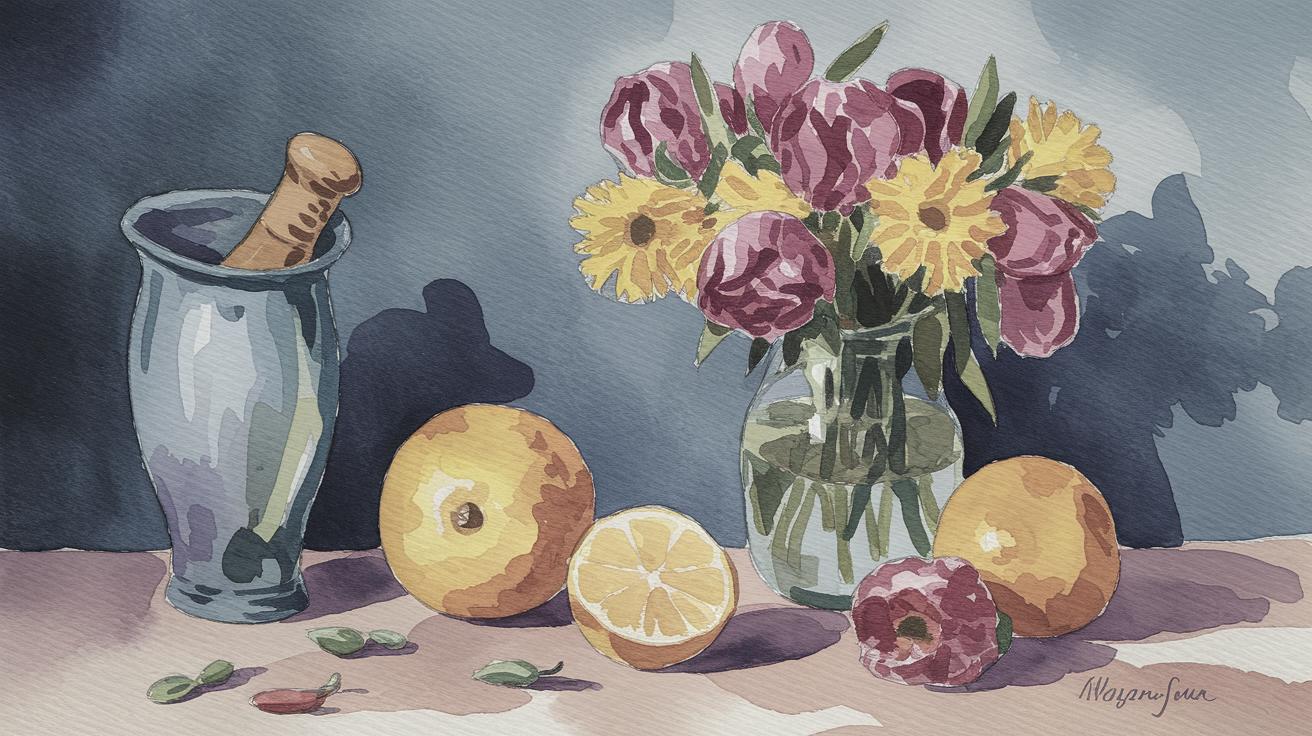
Lemon Still Life Reference
Welcome to a vibrant exploration of the art of still life with a focus on the humble yet captivating lemon. In this article, we will journey through the historical significance of lemons in art, delve into techniques for creating your own masterpiece, and explore the materials needed for watercolor painting. Whether you’re a seasoned artist or a curious beginner, you’ll find invaluable tools, tips, and tutorials here to spark your creativity. From planning your colors to live online classes, get ready to immerse yourself in the world of lemon still life painting.
Still Life References
The tradition of still life painting is steeped in history, inviting artists to capture the quiet beauty of inanimate objects. Still life references serve as an indispensable resource, offering a variety of compositions and light scenarios that both challenge and inspire painters. They enable artists to refine their skills in composition, lighting, and textures.
Lemons, in particular, are an object of fascination. Their texture, color, and natural sheen make them an enthralling subject. Artists often use photographs and real-life arrangements as references to understand the play of light and shadow on lemons’ shiny surfaces. This preparation is crucial in achieving realistic portrayals in your artwork.
The Still Life: On Lemons and Art History
Lemons have a rich history in art, often symbolizing abundance, luxury, and transience. They were frequently depicted in 16th and 17th-century still life paintings, favored for their bright color and unique texture. These artworks served not only as depictions of everyday objects but also as rich allegories and expressions of the artifice.
Many renowned painters, such as Caravaggio and Cezanne, have utilized lemons in their compositions. Caravaggio’s famous use of chiaroscuro highlighted the lemon’s vibrant hue against somber backgrounds, while Cezanne’s post-impressionist pieces captured lemons in a more subdued palette, yet still full of life and vigor. This historical context offers a profound appreciation for the simple fruit within the still life genre.
Lemon Watercolor Tutorial
Creating a watercolor lemon still life painting involves understanding how to manipulate transparency and layers to capture light and shadow. Begin by sketching out the basic outline of lemons and their environment with a light pencil, ensuring your composition is well balanced.
Once you’re satisfied with your sketch, start with a light wash of yellow, leaving certain areas blank for highlights. Gradually add layers to build up color and depth. Be mindful of the lemon’s unique texture; using dry brush techniques can help capture the fruit’s intricate surface.
Lemon Watercolor Pencil Drawing
Watercolor pencils combine drawing and painting techniques, offering a versatile approach to your lemon still life project. Begin by outlining your composition lightly with watercolor pencils, using a variety of yellow and green tones to represent the lemons and their leaves.
After laying down the base colors, use a brush with water to activate the pigments, blending them smoothly. This technique allows for precision in detailing while still achieving the fluid effects typical of watercolors.
Watercolor Materials Needed
Before you start painting your lemon still life, gather all necessary materials. High-quality watercolor paper, ideally 140lb or heavier, is essential for absorbing washes without warping. Acquire a range of brushes, including flat and round tips, to accommodate different techniques.
Invest in artist-grade watercolor paints for better pigment and permanence. A palette, water containers, and a mixing tray are also indispensable tools for creating a detailed and expressive piece.
Two Tools to Help Us Paint in Watercolor
Two often-overlooked tools that can elevate your watercolor practice are the value scale and the color isolator. These assist in understanding and applying both value and color accurately in your compositions.
A value scale helps you judge the contrast and tonal range, which is crucial when depicting the light and shade of lemons. A color isolator aids in identifying and replicating colors, which enhances the vibrancy and realism of your painting.
A Value Scale is An Invaluable Tool
The value scale represents a range from light to dark. This tool is critical in capturing the various shades in a lemon still life, ensuring a rich representation that conveys depth and form.
In practice, comparing your painting against the scale helps you assess if your values are accurate, allowing for more precise adjustments and enhancements. Lemons, with their glossy surfaces, naturally contain a broad spectrum of light and shadow to replicate.
A Color Isolator Helps us See Color And Value
Color isolation is important in determining the exact hue and saturation present in your reference. A color isolator is a simple tool you can create with a small piece of gray or neutral paper with a hole punched in the center.
This allows artists to focus on a single color without interference from surrounding elements, thus applying the proper tints, tones, or shades in their artwork. This technique is particularly useful for achieving the subtle variations found within lemon hues.
The ChromaMagic Tool Can Tell You The Hue, Value, and Chroma
ChromaMagic is an innovative tool that assists artists in breaking down colors into their components: hue, value, and chroma. Understanding these elements enables artists to recreate colors more accurately in their work.
For a lemon still life painting, using ChromaMagic can simplify the process of identifying the nuanced tones, ensuring that your depiction remains lively and true to life. This tool adds a scientific approach to the creative process, enhancing precision and depth in artwork.
Use ChromaMagic now
You can start using ChromaMagic by uploading an image of your still life setup. The software will analyze the image and provide insights into the color properties that will assist you in mixing the right shades for your painting.
Incorporating ChromaMagic ensures your painting remains vibrant and authentic, allowing the bright yellows of the lemons to pop against any background or complementary colors you choose.
Lemon Watercolor – Planning Our Colors
Effective planning of your color palette is crucial before laying down the first brushstroke. Consider the different shades of yellow and green that exist in a natural lemon still life. Selecting harmonious yet contrasting colors will add interest and balance to your artwork.
For the lemons, a mix of cadmium yellows and lemon yellows provides a brilliant color base, while adding small amounts of orange can highlight their warmth under light. For the leaves, varying greens with hints of blue or brown can depict the natural variation seen in foliage.
Make Some Test Swatches on Some Scrap Paper
Before tackling your main canvas, create test swatches on some scrap paper with your chosen colors. This practice lets you see how the colors interact with each other and how they appear once dry, as watercolor can change once settled.
Testing allows you to adjust hues, saturation, and placement, saving you from unwanted surprises on your final piece. Understanding how colors layer on your scrap paper will give you confidence in executing your planned composition.
Do Some Test Colors for the Leaves
Testing colors for the leaves is equally important. Leaves typically feature multiple shades of green, often with subtle veins of different values. Using a scrap page, explore various mixes of greens with small additions of blue or neutral tones for realism.
The task is to create depth and dimension within the leaves, suggesting light passing through and casting natural shadows. A few practice runs will fine-tune your palette, ensuring that your final composition is cohesive and life-like.
Make a Darker Green for the Leaves
Creating a darker green for the leaves can be achieved by blending your existing green with a touch of a complementary color like red or a neutral such as burnt sienna. This addition will subtly deepen the shade without dulling its vibrancy.
These darker tones are particularly useful in depicting the furrows and shadowed areas of the leaves, adding a stunning contrast against the bright yellow lemons. Skillfully employing these subtle dark tones will provide a richer, more dynamic final painting.
Paint the Watercolor Lemons
With your palette ready, it’s time to begin the painting process. Start by applying the lightest colors first, carefully reserving areas for highlights. Gradually build up layers, increasing depth and contrast as you progress.
Employ a methodical approach, ensuring that each wash dries partially before applying the next. This technique maintains clarity and prevents the painting from becoming muddy or overworked. Taking your time with these layers results in a dynamic and lively portrayal of your lemon still life.
Watercolor Lemon Reference Image
Using a reference image is invaluable. Having a clear picture to guide your hand can assist with proportion, detail, and light distribution. Whether sourced from a photograph or a curated real-life arrangement, the reference image serves as a roadmap.
Remember, the reference image is a guide, not a constraint. Adjustments and deviations are natural parts of the artistic process, allowing your unique style and interpretation to shine through in the completed artwork.
Online Zoom Classes
If you’re interested in deepening your skills further, consider enrolling in online Zoom classes specializing in watercolor techniques. These classes offer step-by-step guidance from professional instructors, allowing personal feedback and growth in your artistic journey.
Interactive online sessions provide a community feel, where you’ll connect with fellow art enthusiasts of all levels, enhancing skills while sharing insights and creativity in a collaborative environment.
Sign up for updates on classes and free livestreams
Stay informed about upcoming classes and free livestream opportunities by signing up for updates. These sessions provide an ongoing connection to resources that can significantly enhance your painting skills.
Being part of a network focused on artistic education empowers you with knowledge, tips, and resources that can transform your approach to watercolor painting and beyond.
Interested in Learning to Paint in Watercolor?
There’s never been a better time to dive into the world of watercolor. It’s a medium rich with possibilities, offering endless expression through vibrant washes and subtle gradients. Whether your interest lies in still life, landscapes, or abstract visions, watercolor painting provides an engaging and fulfilling outlet.
Between online resources, books, and classes, there’s a vast array of options tailored to your personal learning style. Watercolor fosters not only technical skill but also nurtures creative freedom and personal expression.
I have many more step-by-step tutorials and videos!
For those eager to expand their skills further, there are numerous tutorials and videos available that cover a range of subjects and techniques. These resources allow independent learners to progress at their own pace, revisiting fundamental concepts or exploring new styles.
Engaging with multi-media tutorials enhances understanding through visual and auditory instruction, often accompanied by downloadable materials for practice and refinement.
The Final Thing
Armed with newfound insights and techniques, you’re ready to tackle your own lemon still life watercolor painting. Embrace the process, for it’s as much about the journey of creation as the final piece.
Remember, the art of painting is continuously evolving. Each brushstroke contributes to your growth as an artist, ever refining your perception, technique, and unique voice within this vibrant medium.
| Section | Content Summary |
|---|---|
| Still Life References | Exploration of lemon’s role in art and its aesthetic appeal in still life compositions. |
| The Still Life: On Lemons and Art History | Historical significance of lemons in art, featuring notable artists and their works. |
| Lemon Watercolor Tutorial | Step-by-step guide on creating lemon watercolors, focusing on layers and transparency. |
| Lemon Watercolor Pencil Drawing | Combining drawing and painting using watercolor pencils for detailed effects. |
| Watercolor Materials Needed | Essential materials needed for watercolor painting including paper, brushes, and paints. |
| Two Tools to Help Us Paint in Watercolor | Overview of helpful tools like the value scale and color isolator for accurate depiction. |
| A Value Scale is An Invaluable Tool | Use of value scale to evaluate contrast, enhance realism and depth. |
| A Color Isolator Helps us See Color And Value | Benefits of using a color isolator for identifying authentic colors in references. |
| The ChromaMagic Tool Can Tell You The Hue, Value, and Chroma | Introduction to the ChromaMagic tool for precise color analysis and replication. |
| Lemon Watercolor – Planning Our Colors | Strategies for palette planning specific to lemons and leaves in still life paintings. |
| Make Some Test Swatches on Some Scrap Paper | Importance of swatch testing for color accuracy and layering practice. |
| Do Some Test Colors for the Leaves | Testing and mixing leaf colors for realistic details and dimension. |
| Make a Darker Green for the Leaves | Techniques for achieving deeper greens to enhance leaf shadows and textures. |
| Paint the Watercolor Lemons | Guided application of planned colors and techniques to create vivid watercolor lemons. |
| Watercolor Lemon Reference Image | Utilization of reference images to guide composition and light detailing. |
| Online Zoom Classes | Benefits of joining interactive classes to develop watercolor skills in a community setting. |
| Sign up for updates on classes and free livestreams | Encouragement to register for educational resources to enhance learning. |
| Interested in Learning to Paint in Watercolor? | Inspiration to explore watercolor painting as a rich and expressive art form. |
| I have many more step-by-step tutorials and videos! | Available resources for continuous learning through tutorials and instructional videos. |
| The Final Thing | Encouragement and motivation for embarking on your personal still life painting journey. |