Exploring the World of Kitsch Art
Kitsch art is often regarded with a touch of nostalgia or disdain, yet it plays a significant role in the art world. This article delves into the nuances of kitsch, beginning with its philosophical roots in German Idealism, moving through its evolution and notable artistic contributions, to related terms, and specific works of art. From the musings of Kant and Hegel to the dramatic flair of Odd Nerdrum, we’ll explore how kitsch has both challenged and complemented traditional art narratives. Additionally, we will discover selected artists and artworks that embody kitsch, alongside creative exercises that embody its principles. Through this exploration, the reader will gain a comprehensive understanding of kitsch’s place within the broader art context.
The Founders of Art: Kant, Hegel and the German Idealism
The philosophical foundations laid by Immanuel Kant and Georg Wilhelm Friedrich Hegel have significantly influenced our understanding of art, including the concept of kitsch. Kant’s exploration of aesthetics in “Critique of Judgment” emphasized the subjective nature of beauty, suggesting that art is a reflection of personal taste and cultural context. Kant’s perspective opened the door for a more pluralistic view of art, where kitsch could be viewed as a legitimate expression of aesthetic experience rather than simply inferior art.
Hegel further shaped the discourse on art through his integration of aesthetics with historical consciousness. He proposed that art has an evolutionary trajectory, where each era’s artistic expressions are products of cultural and philosophical developments. This framework inevitably leads to the recognition of kitsch as a cultural artifact reflective of societal values and tastes at a particular moment in time. Through Hegel’s lens, we can appreciate the role of kitsch not merely as lowbrow art but as a meaningful narrative within the tapestry of art history.
The Birth of Kitsch
The term “kitsch” originated in the late 19th century, emerging from the vocabulary of German art markets. It referred to artworks that were mass-produced for the purpose of consumption by a growing middle class. This new audience sought art that was both affordable and accessible, which led to the proliferation of sentimental and decorative pieces. As society became more industrialized, the aesthetics of kitsch reflected a democratization of art, allowing more people to engage with visual culture.
As kitsch evolved, it was often criticized for its perceived lack of authenticity and depth compared to high art. Critics argued that kitsch pieces were mere imitations, devoid of the genuine expression and innovation that characterized fine art. However, these critiques didn’t deter kitsch from becoming embedded in popular culture. Instead, kitsch continued to thrive, particularly through its embrace by avant-garde movements that saw potential in its power to challenge art conventions and explore themes of irony and nostalgia.
High Kitsch?
The concept of “high kitsch” suggests a paradoxical blend where kitsch elements find their way into esteemed art circles. This happens when traditional kitsch attributes, like bright colors and mass appeal, are repurposed in ways that offer sophisticated commentary or ironical reflections. High kitsch symbolizes a self-awareness in art, playing with the boundaries between pop culture and high art, and engaging audiences in a dialogue about art’s purpose and accessibility.
The acceptance of high kitsch has led to debates on its place in the art canon. Artists who employ high kitsch often tackle complex themes such as consumerism, identity, and cultural homogenization, thereby elevating kitsch beyond its dismissive origins. This convergence of lowbrow aesthetics and highbrow intent offers a fertile ground for experimental narratives, breaking barriers and creating new forms of visual storytelling that resonate with contemporary audiences.
Odd Nerdrum and Kitsch
Odd Nerdrum, a Norwegian figurative painter, stands out as a proponent of reclaiming the kitsch label. In Nerdrum’s view, kitsch should not be seen as a pejorative term but as an art form in its own right, worthy of preservation and respect. His works often feature dramatic, theatrical elements and emphasize narrative, challenging the minimalist and conceptual trends that dominate high art circles.
Nerdrum’s commitment to kitsch is evident in his manifesto, where he advocates for a return to craftsmanship and storytelling in art. By drawing from classical techniques and themes, Nerdrum showcases how kitsch, when executed with skill and intent, can evoke powerful emotional responses and provide compelling social commentary. His approach invites us to reconsider the conventional boundaries between fine art and kitsch, prompting a broader appreciation of diverse artistic expressions.
Related terms and concepts
Kitsch is related to several other terms and concepts that enrich its understanding. Among these are “camp,” which shares kitsch’s ironic, over-the-top sensibilities but differs in its queer cultural associations and theatricality. Camp leans into exaggeration and artifice, celebrating the aesthetic as a form of resistance and expression.
Another related term is “pop art,” which emerged as a reaction against the elitism of high art by incorporating images from popular culture. While pop art shares kitsch’s democratic impulses, it often differs in its critical stance towards consumerism and media influence. Understanding these terms provides insight into the multifaceted nature of kitsch and its relevance in various cultural and historical contexts.
Selected artists in the collection
The legacy of kitsch is visible in the works of several notable artists who have embraced its aesthetic or challenged its conventions. Among them is Jeff Koons, known for his large-scale reproductions of everyday objects and whimsical, kitschy sculptures that critique consumer culture. His works blend kitsch and high art, provoking discussions on value, taste, and artistic merit.
Another exemplary artist is Takashi Murakami, whose superflat style draws from Japanese popular culture and melds traditional art with kitsch elements. Murakami’s work celebrates the vibrancy of popular imagery, blurring the lines between art and commercial products. These artists highlight how kitsch continues to inspire and innovate across different artistic domains.
Selected artworks in the collection
Among the artworks that embody kitsch, perhaps none are as iconic as Andy Warhol’s “Campbell’s Soup Cans.” This series elevates everyday consumer items to art objects, challenging perceptions of taste and mass production. Warhol’s work appropriates kitsch aesthetic in a way that questions authenticity and artistic value in a consumer-driven society.
Similarly, Koons’ “Balloon Dog” sculptures are quintessential examples of kitsch’s impact. These oversized, shiny, and colorful creations transform a commonplace party favor into a high art spectacle, intertwining joy and irony. These works illustrate how kitsch can operate as a conduit for cultural critique and creative exploration.
10-Minute Thumbnail Sketch Challenge: Birds
Embracing the spirit of kitsch involves spontaneity and playfulness. A creative exercise, like a 10-minute thumbnail sketch of birds, allows artists to engage with kitsch principles. This challenge encourages experimentation with form and color, aiming for whimsical, impressionistic renderings rather than precise detail.
The focus is on capturing the essence and vitality of the subject in a short period, lending to imaginative interpretations. Such exercises can celebrate the cheerful and approachable qualities of kitsch, freeing artists from the constraints of realism and perfection.
A Floral Spotlight: Each Iris Has Its Own Personality
In kitsch art, every subject is imbued with charm and character, transforming ordinary subjects into something extraordinary. When painting irises, each bloom can be depicted with distinct personality and flair. Emphasizing vibrant colors and exaggerated features can highlight the unique beauty of each flower, consistent with kitsch’s celebratory ethos.
This approach showcases how kitsch encourages a personal connection with the subject matter, inviting viewers to find joy and wonder in the mundanity of everyday life. Such floral renderings can transform a common garden scene into a spectacle of nature’s exuberance.
Indicate, Don’t Illustrate
A vital lesson from kitsch art is the idea to “indicate, not illustrate.” This principle advocates for suggestion over direct representation, encouraging artists to express ideas and emotions rather than focusing solely on realistic depiction. In kitsch, the power of implication can evoke richer narratives and emotional responses.
By leaving room for interpretation, artists can engage their audiences in a dialogue, inviting them to complete the story. This approach aligns with the imaginative and fantastical elements of kitsch, promoting an interactive and personal viewing experience.
Painting of the Week: “Old Copper and Fruit”
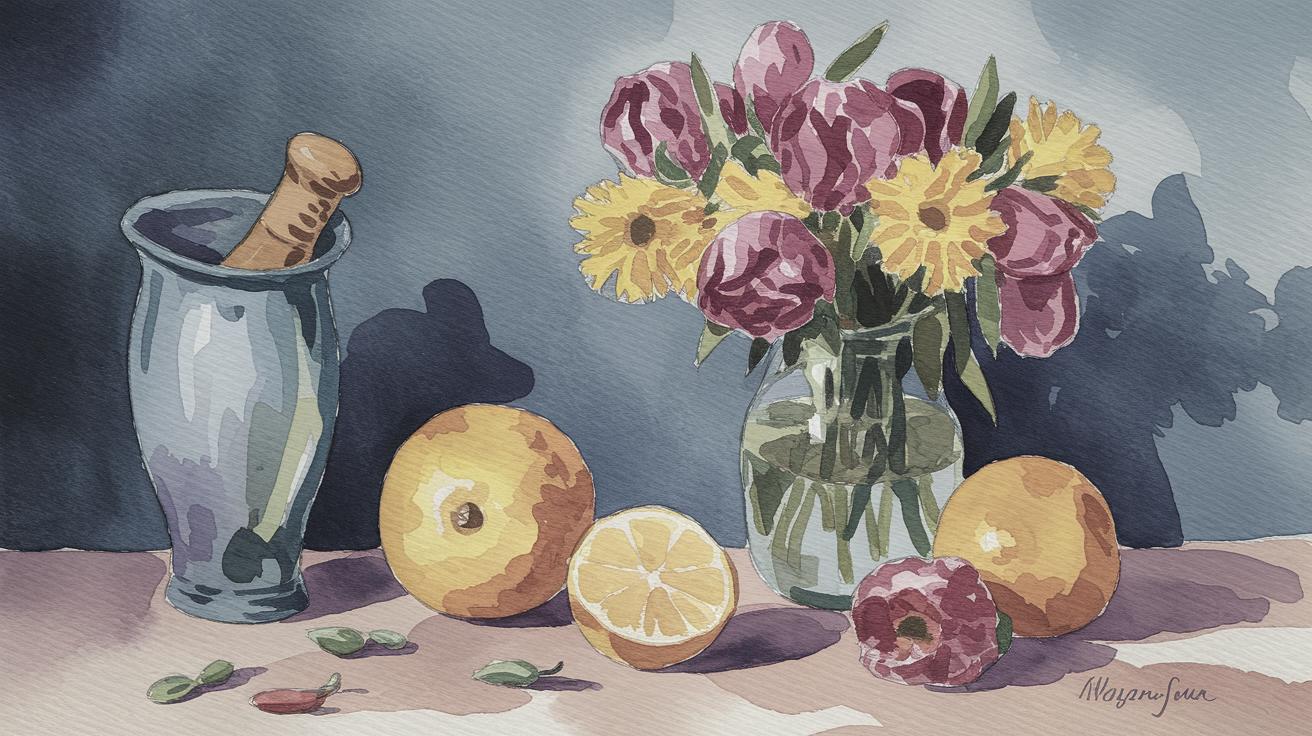
The painting “Old Copper and Fruit” exemplifies the interplay of nostalgia and kitsch. With its nostalgic evocations and warmth, the artwork portrays a traditional still-life scene but infuses it with vivid color and exaggerated forms typical of kitsch aesthetics. The copper’s gleam and fruit’s exaggerated hues invite viewers into an idealized vignette of domesticity and abundance.
This piece serves as a reminder of kitsch’s ability to elevate the vernacular into the realms of art by infusing ordinary scenes with liveliness and imagination. It resonates with viewers by appealing to universal themes of comfort, beauty, and familiarity.
Starting a Painting with Design and Values
When beginning a painting with a kitsch influence, considering design and values first is crucial. The principles of kitsch emphasize strong compositions and striking contrasts, with design choices drawing the viewer’s eye and setting the emotional tone. Value plays a vital role in this process, with bold light and dark dynamics enhancing the drama and storytelling within a piece.
By starting with a strong foundation in design and values, artists can create works that possess the striking appeal of kitsch while maintaining coherence and harmony. This approach underscores how kitsch art thoughtfully balances exuberance with cohesiveness, resulting in compelling and memorable artworks.
| Lessons Learned | Summary |
|---|---|
| Philosophical Foundations | Kant and Hegel provided aesthetic paradigms that permit the existence of kitsch within art’s historical narrative. |
| Evolution of Kitsch | Born out of middle-class consumption, kitsch evolved from mass-produced art to poignant cultural critique. |
| High Kitsch Considerations | High Kitsch blurs lines with its ironic aesthetic and elevated cultural commentary. |
| Odd Nerdrum’s Influence | A key advocate for kitsch as legitimate art, emphasizing craftsmanship and storytelling. |
| Artistic Connections | Exploring terms like camp and pop art showcases kitsch’s role and influence in art history. |
| Exemplary Artists and Artworks | Figures like Jeff Koons and Takashi Murakami illustrate the potent combination of kitsch and cultural dialogue. |
| Creative Exercises | Exercises emphasizing spontaneity and imagination reflect kitsch’s playful and approachable nature. |