
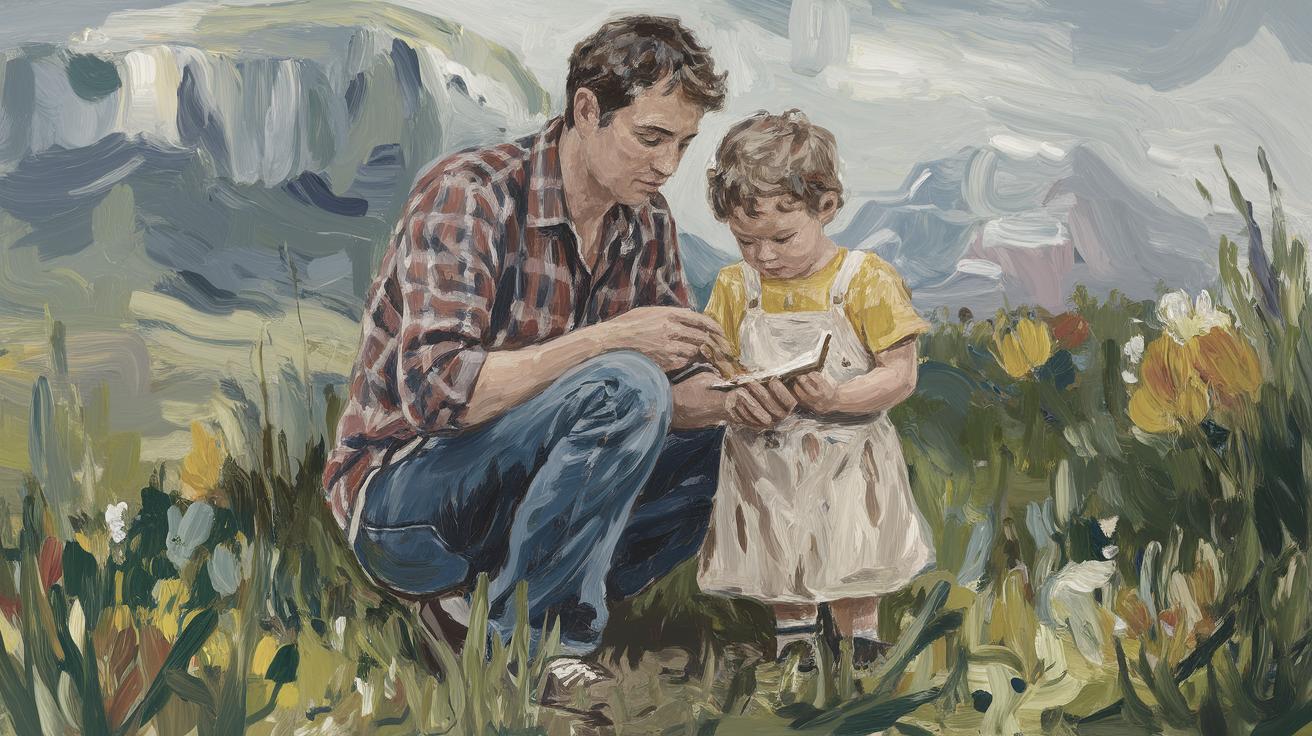
Father and Son Painting
Every piece of art tells a story, a narrative woven from the threads of hues, strokes, and imagination. In this blog post, we take a deep dive into the realm of painting and highlight captivating aspects such as additional figurative artworks by Teresa Brutcher, tackle unique challenges like the 10-minute thumbnail sketch of birds, and shine a light on the unique personalities within each iris in floral paintings. We also explore the importance of starting a painting with design and values, the art of indicating versus illustrating, and finally, savor the richness of the painting of the week, “Old Copper and Fruit.” This collection of topics is meant to inspire both seasoned artists and budding enthusiasts alike in their creative journeys.
Additional Figurative Art Works by Teresa Brutcher
Teresa Brutcher’s figurative artworks capture the essence of the human experience with exquisite detail and emotive power. Her ability to portray both the vulnerability and strength inherent in her subjects is a testament to her mastery of the medium. Each piece seems to tell a story, inviting the viewer to walk alongside the characters and delve into their innermost thoughts and feelings.
Her work stands out for its striking use of color and the fluidity of her brush strokes which bring her characters to life. These pieces often explore themes of identity, belonging, and introspection, allowing viewers to see themselves reflected in the painted protagonists. Brutcher’s distinctive style is an inspiration to artists and art lovers, demonstrating the depth and diversity possible within figurative painting.
10-Minute Thumbnail Sketch Challenge: Birds
The 10-minute thumbnail sketch challenge is an exciting exercise designed to sharpen an artist’s skills and promote spontaneity in their work. Focusing on birds as a subject requires a keen eye for detail and an understanding of their intricate forms and delicate movements. This challenge is not only about speed but also precision, as artists must convey the essence of these creatures in a limited time frame.
Participants often find that the constraints of the challenge foster creativity and innovation, pushing them to make bold decisions and capture the most crucial elements of their subjects. This exercise can be particularly beneficial for artists looking to improve their compositional skills and develop a more intuitive approach to drawing and painting.
A Floral Spotlight: Each Iris Has Its Own Personality
The beauty of floral painting lies in its ability to not only replicate the visual splendor of flowers but also to capture their unique personalities. The iris, with its intricate petals and vibrant colors, offers a rich subject for artists to explore. Each bloom tells its own story, and through careful attention to detail and color, artists can communicate the essence of its character.
In painting irises, it is critical to understand the delicate balance between form and color. The subtleties of shading and the interplay of light must be harnessed to reflect the vitality and diversity of these flowers. By focusing on each iris individually, artists can transcend mere representation, creating works that resonate with emotion and life.
Starting a Painting with Design and Values
One of the foundational steps in creating a compelling work of art is beginning with a strong design and value structure. Design involves the composition and arrangement of elements within a piece, while values pertain to the lightness or darkness of colors used. These aspects are crucial as they guide the viewer’s eye and influence the overall aesthetic of the painting.
Artists must consider the balance between different parts of the painting, ensuring that the intended focal point is highlighted effectively. By focusing on design and values from the start, artists can create pieces that are not only visually appealing but also deeply engaging. Mastery of these elements can lead to the creation of dynamic and cohesive works that truly capture the artist’s vision.
Indicate, Don’t Illustrate
The principle of “Indicate, Don’t Illustrate” encourages artists to suggest rather than define every detail. By implying elements through strategic use of color, texture, and shape, artists can create more expressive and engaging artworks. This approach allows the viewer’s imagination to fill in the gaps, fostering a more interactive and personal experience with the artwork.
This technique is particularly useful in capturing motion or emotion, where the viewer can sense the dynamic energy or underlying narrative without being overwhelmed by explicit details. It invites viewers to explore the artwork’s nuances, adding layers of meaning and complexity to the visual experience.
Painting of the Week: “Old Copper and Fruit”
This week’s standout piece is “Old Copper and Fruit,” a painting that beautifully captures the interplay between organic textures and the metallic sheen of copper. The work’s meticulous attention to detail highlights the artist’s skill in rendering different materials and surfaces with lifelike accuracy.
The juxtaposition of the verdant, fresh fruit against the aged, tarnished copper creates a compelling visual narrative that speaks to the passage of time and contrasts in nature. The viewer is invited to appreciate the stillness and serenity of the composition, as well as the subtle storytelling elements conveyed through texture, placement, and lighting.
Lessons Learned
| Topic | Key Points |
|---|---|
| Additional Figurative Art Works by Teresa Brutcher | Exploration of human experience; emotive power and detail; themes of identity and belonging. |
| 10-Minute Thumbnail Sketch Challenge: Birds | Quick sketching to capture essence; improving compositional skills and spontaneity. |
| A Floral Spotlight: Each Iris Has Its Own Personality | Balancing form and color; capturing unique characters of irises. |
| Starting a Painting with Design and Values | Importance of composition and values in guiding viewer’s eye and aesthetic. |
| Indicate, Don’t Illustrate | Creating expressive works by implying rather than defining details. |
| Painting of the Week: “Old Copper and Fruit” | Interplay of textures; narrative through contrasting elements. |

