Exploring Still Life Photo References for Art
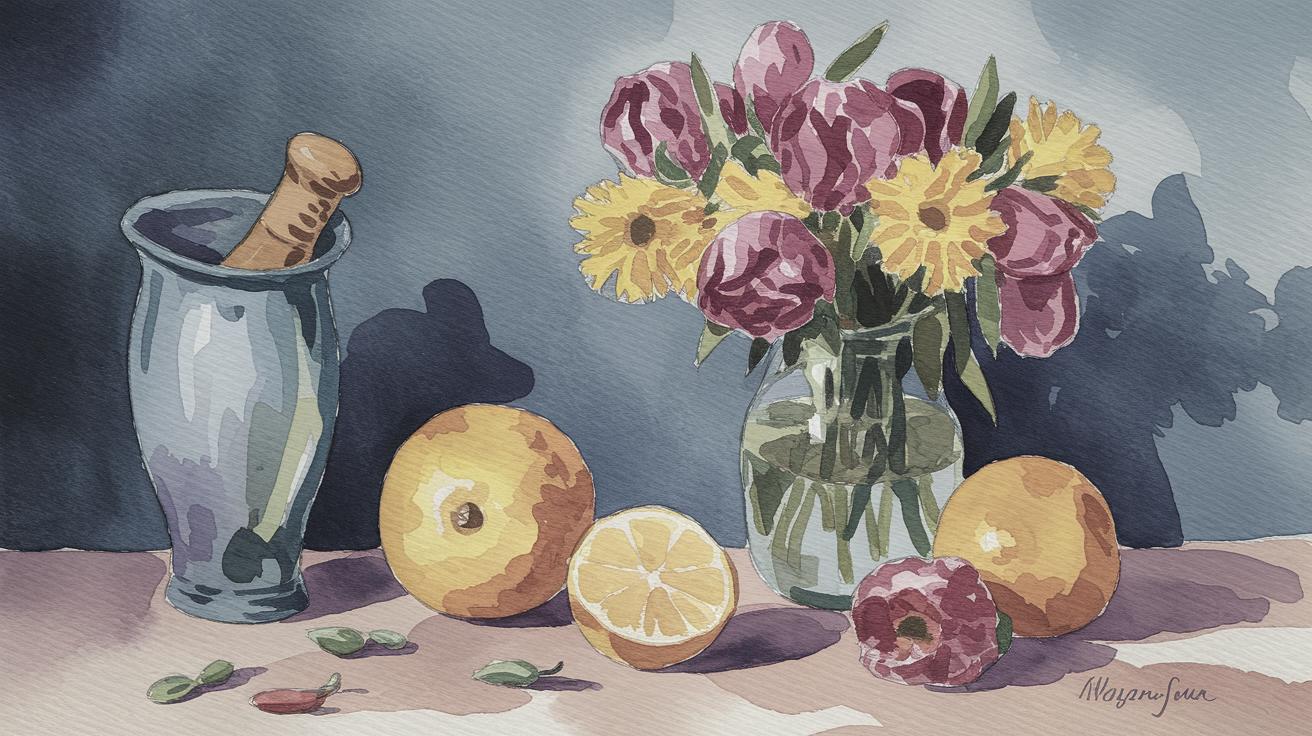
Still life photo references offer a profound gateway into the world of artistic expression and practice. They serve as essential tools for artists, ranging from beginners to professionals, allowing them to hone various skills such as color use, value distinction, and form modeling. By utilizing diverse still life setups, artists can vastly improve their technique and understanding of different visual elements. This guide delves into the benefits of still life photo references, with a focus on how specific backgrounds and objects, like white backgrounds, colored spheres, and reflective materials, can influence your artistic practice. Further, it explores the importance of expanding creativity through reflective, landscape, and figurative references, providing a comprehensive outlook on the role of photographic visuals in art enhancement.
White backgrounds are good for watercolor exercises
Using a white background for still life photo references is particularly beneficial for watercolor exercises. The purity of a white backdrop eliminates distractions, allowing you to focus solely on color blending and transparency — crucial skills in watercolor painting. White backgrounds provide a true representation of colors, highlighting their vibrancy and subtle nuances as the pigments interact with water. This setting can enhance your understanding of how different hues mix and layer, creating a more dynamic and controlled application in your artwork.
Watercolorists often face the challenge of mastering the transparency and fluidity unique to this medium. With a white background, you can observe color transitions more accurately and develop precise control over washes and gradients. Inspired by the minimalist backdrop, artists can pay attention to how light and shadow interplay with color, refining their approach to creating depth and realism in watercolor compositions.
White wooden blocks are great for practicing values
As an artist, understanding values is crucial for rendering depth and dimension in artwork. White wooden blocks serve as excellent tools for value practice, limiting distractions to allow focus on light and shadow. These simplistic forms lay the groundwork for analyzing how light impacts surfaces, teaching you to convey three-dimensionality through tonal variations.
With white as the primary color, you can concentrate on converting a full range of values — from stark whites to deep shadows. This exercise helps artists develop a stronger sense of contrast, aiding in the creation of compelling visuals across various mediums. By practicing with these blocks, you’ll hone the ability to discern subtle value changes and apply them effectively to interpret complex scenes in your work.
Colored spheres are good for color exercises and modeling form
Colored spheres are vital still life references for understanding color dynamics and modeling form. Their simple yet elegant structure provides a platform for studying color theory, including aspects like hue variation, value shifts, and chromatic intensity. Incorporating colored spheres into your practice can greatly enhance your skills in creating realistic representations of spherical objects, which can be extended to other forms.
Artists use colored spheres to practice shading and modeling, providing insight into how light interacts with surfaces, curves, and textures. By adjusting the light source, you can observe how color values change, thus improving your skills in rendering highlights and shadows. This knowledge is essential when attempting to replicate life-like appearances in artwork and understanding the impact of color in shaping perceptions.
Still Life Photo References
Still life photo references provide endless opportunities for artists looking for inspiration and technique improvement. Offering a variety of objects, compositions, and lighting conditions, these photos serve as a canvas for exploring artistic choices. Selecting the right still life photo reference can ignite your creativity, giving insight into how different elements like texture, placement, and harmony contribute to an effective composition.
By analyzing these references, artists can experiment with scale, proportion, and perspective, ultimately gaining a comprehensive understanding of visual storytelling. The wealth of information available through still life photos can be adapted to suit various artistic goals, from practicing realism to creating abstract interpretations. This approach helps to develop a flexible skill set, empowering artists to expand their creative horizons.
Reflective References
References involving reflective surfaces provide critical insights into capturing light interactions and intricate details. By studying reflections, artists gain the ability to render complex patterns and distortions often seen in glass, metal, and water. These references challenge artists to consider light refraction and reflection angles when depicting reflective surfaces convincingly within their compositions.
Engaging with reflective photo references fosters a keen eye for recognizing subtle shifts in light and color. Artists learn how to convey the shimmering effects and sharp contrasts that are characteristic of reflective materials, enhancing the realism and dimension in their work. Such skills are invaluable when creating lifelike depictions and improving an artist’s capability to manipulate highlights and gloss effectively.
Landscape References
Landscape references open up new avenues for exploring expansive compositions and atmospheric perspectives. These references are essential for mastering the use of space, depth, and scale in art. Through landscapes, artists can practice capturing the essence of natural environments while experimenting with lighting conditions and environmental hues.
The diversity inherent in landscapes encourages artists to refine their approach to depicting varied terrains, skies, and ecosystems. Engaging with landscape references pushes boundaries, enabling artists to convey emotion and movement in their work. New insights into atmospheric perspective and depth perception enrich the ability to illustrate compelling narratives set against vast backgrounds.
Portrait and Figurative References
Portrait and figurative references play a pivotal role in enhancing life drawing and capturing human expression. Examining these references allows artists to refine their understanding of anatomy, proportions, and emotional resonance within their work. Artists face the challenge of rendering likeness and personality, making these references invaluable for developing detailed and relatable characters.
Through studying portraiture, artists can practice various techniques, from the soft rendering of skin tones to the intricate detailing of facial features. Figurative references accelerate growth in dynamic posing and gesture drawing, pushing artists to convey movement and vitality. These foundational skills are central to crafting compelling figurative pieces that resonate with authenticity and life.
Future Prospects
| Reference Type | Purpose | Skills Developed |
|---|---|---|
| White Backgrounds | Watercolor Exercises | Color Blending, Transparency |
| White Wooden Blocks | Practicing Values | Value Distinction, Depth Perception |
| Colored Spheres | Color Exercises, Modeling Form | Color Theory, Light Interaction |
| Still Life References | Inspiration, Technique Practice | Composition, Perspective |
| Reflective References | Light Studies | Reflective Surfaces, Shading |
| Landscape References | Environmental Composition | Space, Depth, Atmosphere |
| Portrait and Figurative References | Life Drawing, Expression | Anatomy, Proportion, Lifelikeness |