Exploring Diagonal Composition in Art
Diagonal composition plays a crucial role in adding dynamism and visual interest to artworks. This blog post delves into various aspects of incorporating diagonal composition in art through unique challenges and techniques. From capturing birds in quick sketches to rendering distinctive personalities of irises, artists can explore diverse subject matter while enhancing their skills. We also look into starting a painting with an emphasis on design and values, and how to capture the essence of subjects through indication rather than illustration. Lastly, we highlight “Old Copper and Fruit” as the painting of the week, which exemplifies masterful use of diagonal composition. Join us on this artistic journey to uncover the multifaceted uses and benefits of diagonal composition.
10-Minute Thumbnail Sketch Challenge: Birds
Artists often seek quick exercises to refine their skills and develop a sharper eye for composition. The 10-minute thumbnail sketch challenge focusing on birds is a perfect way for artists to improve their ability to capture movement and essence. By limiting the time frame to ten minutes, artists learn to make instantaneous decisions about what elements are essential to convey a bird’s form and posture. This technique encourages artists to utilize diagonal lines to impart a feeling of movement and vitality, essential to the nature of avian subjects.
The challenge entails observing birds in various states of motion and committing these to paper swiftly. Diagonal lines often suggest flight or a dynamic stance, allowing the artist to quickly convey the energy of the subject. These fast-paced sketches serve not only as fundamental practice in composition but also as a repository of ideas for larger works. Experimenting with angles and inclinations in quick sketches cultivates a visual lexicon that artists can draw upon in more detailed pieces.
A Floral Spotlight: Each Iris Has Its Own Personality
Irises, with their varied colors and intricate forms, offer a wealth of opportunities for exploring diagonal composition. As artists capture the unique personalities of these flowers, they can use diagonal lines to draw attention to specific features or motion within the subject. The diagonal approach helps in highlighting the directional growth of petals or the subtle curves as they bend gracefully.
Each iris variety can evoke different emotions and movements through the careful placement of diagonal lines. Whether an artist chooses to emphasize the elegance of a blooming iris or the delicate droop of one past its prime, diagonal composition aids in crafting a narrative around each floral subject. By doing so, artists not only represent flowers more vividly but also invite viewers to appreciate the underlying dynamic principles at play behind these natural forms.
Starting a Painting with Design and Values
The initiation of a painting often dictates the success of the final piece. Incorporating diagonal composition from the outset helps artists establish a robust design that considers both the layout of elements and the interplay of tonal values. Emphasis on design and values can be achieved by starting with a bold diagonal element, which acts as a guide for the arrangement of other components within the painting.
Artists may experiment with value contrasts along diagonal lines to accentuate certain areas of the composition, creating a balanced yet engaging visual narrative. This approach ensures that not only is the composition more dynamic, but the values throughout the piece contribute depth and hierarchy to the design. By marrying strong diagonal guidelines with value studies early in the process, artists can develop paintings that are both visually compelling and structurally sound.
Indicate, Don’t Illustrate
One of the subtle arts of painting is to indicate rather than illustrate. This principle becomes particularly powerful when coupled with diagonal composition. By suggesting forms and movement with minimal lines and brushstrokes, artists leave room for viewers’ imaginations, thereby engaging them more deeply. Diagonal strokes effectively imply motion, tension, and direction, offering a more narrative-driven experience without overwhelming detail.
Utilizing diagonals allows artists to hint at what might be, drawing attention to the potential action or emotion within the painting. It teaches restraint, encouraging artists to focus on the ‘essence’ of the subject rather than becoming bogged down by the minutiae. This skill can be pivotal in creating evocative works that resonate on an emotional level, providing a richer artistic discourse between the artist and the audience.
Painting of the Week: “Old Copper and Fruit”
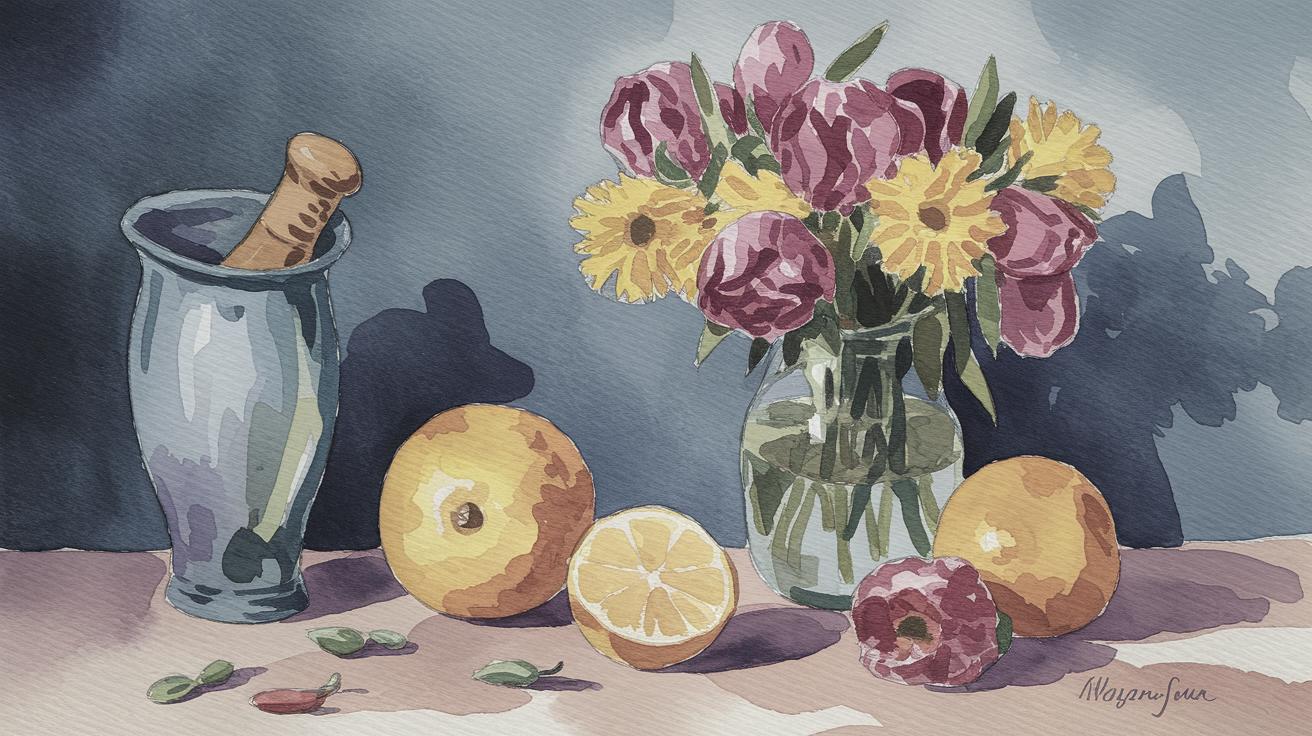
This week’s featured painting, “Old Copper and Fruit,” exemplifies the potent use of diagonal composition. The art piece centers around a rustic copper pot set against a backdrop of ripe, luscious fruits. The artist skillfully uses diagonal lines to orchestrate the viewer’s gaze across the composition, drawing focus to the textural contrast between the smooth, opulent fruit and the aged, tarnished copper.
Through the use of diagonals, the piece communicates a sense of abundance and age, inviting viewers to ponder the relationship between the transient (fruit) and the enduring (copper). The strategic placement and alignment lead the eye organically from the foreground to the background, ensuring a seamless visual journey across the painting. This illustrates how diagonal composition can elevate a still life from a mere depiction of objects to a thoughtfully woven narrative.
Lessons Learned
| Subheading | Key Points |
|---|---|
| 10-Minute Thumbnail Sketch Challenge: Birds | Utilizes quick, dynamic sketches to capture movement; enhances swift decision-making for composition. |
| A Floral Spotlight: Each Iris Has Its Own Personality | Emphasizes unique characteristics of flowers through diagonal lines; captures personality and grace. |
| Starting a Painting with Design and Values | Focuses on initial bold diagonal elements to guide composition; integrates tonal values for depth and hierarchy. |
| Indicate, Don’t Illustrate | Advocates for suggesting instead of detailing; engages viewer imagination, enhancing narrative depth. |
| Painting of the Week: “Old Copper and Fruit” | Demonstrates the narrative power of diagonal composition in transforming a still life into a cohesive visual story. |