Creating Depth in a Painting
Creating depth in a painting is an essential aspect of artistry that brings life and realism to the canvas. The concept encompasses various techniques and approaches, each adding to the richness and three-dimensional quality perceived by the viewer. From the initial planning stages with design and values to the subtle nuances of indicating rather than illustrating details, each step is crucial in forming a cohesive piece. In this blog, we will explore several key concepts and techniques such as thumbnail sketching, spotlighting florals, and analyzing design, which are integral in developing depth. We will also look at an exemplary piece, “Old Copper and Fruit,” to see these principles in action. By understanding and applying these methods, artists can foster a more immersive viewer experience, cultivating deeper connections with their paintings.
10-Minute Thumbnail Sketch Challenge: Birds
Thumbnail sketches are quick, small drawings that serve as an essential tool for artists to experiment with layout, composition, and perspective without getting bogged down in details. The 10-minute thumbnail sketch challenge, specifically focusing on birds, encourages artists to capture the essence and dynamic poses of avian subjects swiftly. By limiting the time, artists are compelled to prioritize the most striking and vital elements of a scene, stimulating a focus on structure and depth.
This swift exercise pushes artists to explore various perspectives and angles. When sketching birds, one can focus on positioning them in dynamic poses that create a sense of movement and three-dimensionality. This method is crucial because it highlights the importance of recognizing and capturing the characteristics that suggest depth – such as wing curvature or the positioning of the bird in its environment. As a result, these thumbnail sketches act as a foundation for larger, more detailed works.
A Floral Spotlight: Each Iris Has Its Own Personality
When delving into the world of florals, the subject matter provides a unique challenge for creating depth due to the intricate and delicate nature of petals and foliage. Spot-lighting individual irises, for instance, can emphasize their unique personalities and contribute to a lively composition. Each iris can be portrayed with attention to its distinct structural features, which adds a layer of richness to the painting.
To enhance depth, artists should focus on the play of light and shadow across the petals and how these create volume and space. Careful gradation of color and value shifts can add to the illusion of depth, making the irises appear to pop out from the canvas. Such attention to detail contributes to the viewer’s ability to perceive different layers within the painting, thus offering an immersive experience.
Starting a Painting with Design and Values
Designing a painting’s composition and values is a fundamental step in enforcing depth, providing a roadmap that guides the painter through the creative process. Start by organizing the primary visual elements of your piece, making deliberate choices about where to place key focal points and how they relate to one another spatially. Good design naturally leads the eye and gives the painting structure.
Values refer to the scale of light and dark in a painting, which is crucial for establishing depth perception. By understanding and utilizing value contrasts effectively, artists can create the illusion of light receding and advancing across surfaces. This not only dictates the structure of forms within the painting but also influences the mood and emotions the artwork conveys. A well-executed combination of design and values results in a cohesive and visually engaging composition.
Indicate, Don’t Illustrate
One of the subtler, yet crucial methods to enhance depth is the strategy of indicating rather than illustrating every detail. The idea is to hint at the presence of details without meticulously drawing them out, allowing the viewer’s imagination to fill in the gaps. This approach relies on the power of suggestion, which can effectively contribute to the sense of space and dimensions within a painting.
By suggesting rather than explicitly outlining each element, artists invite viewers to engage more actively with the painting, fostering a personal connection and interpretation. This technique works well for background elements or in busy compositions, where indicating can prevent the work from becoming overly cluttered, thus maintaining visual clarity and depth without sacrificing intricacy.
Painting of the Week: “Old Copper and Fruit”
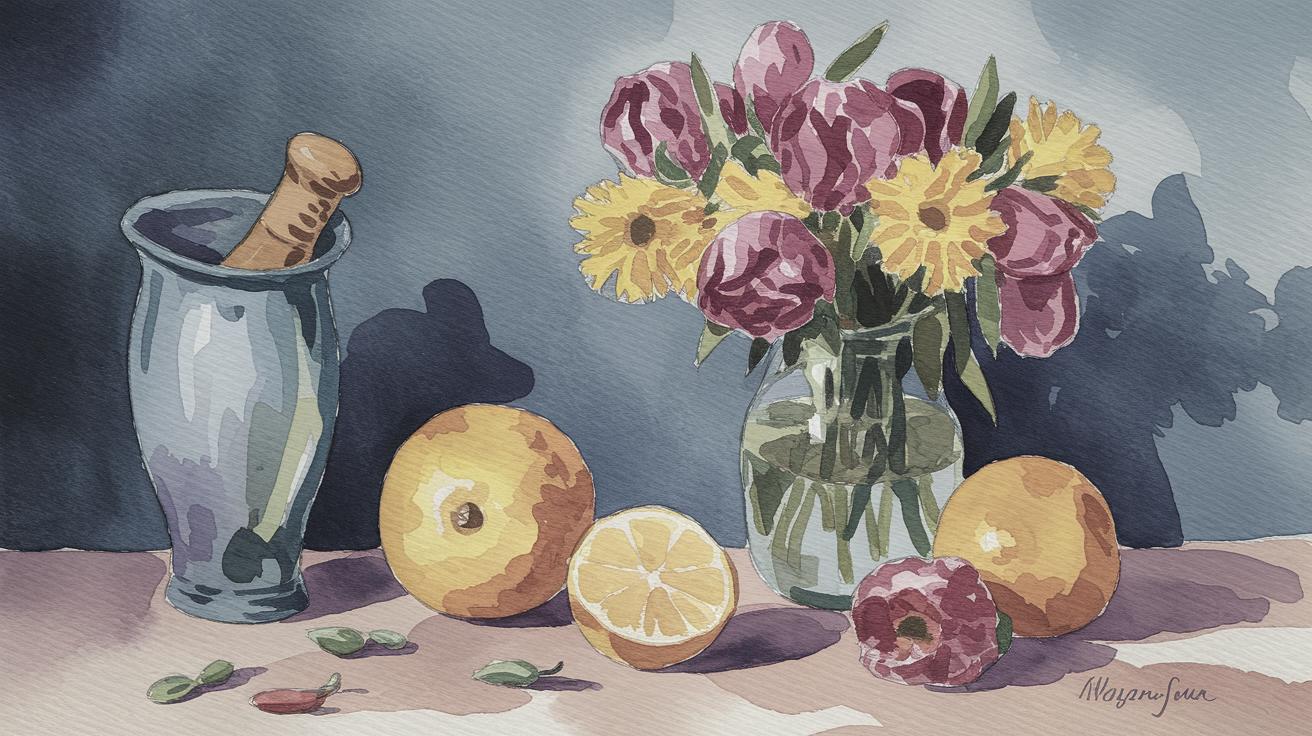
The painting “Old Copper and Fruit” serves as an exemplary case study for understanding how various techniques contribute to depth in a piece. The artist’s use of contrasting values and strategic placement of shapes creates a compelling composition where elements such as the copper pot and fruit are harmonized in a dynamic equilibrium. The quality of light rendered in the reflection of the copper offers a luminous focal point that captures the eye.
Furthermore, the nuanced shadows and highlights used in different parts of the painting complement the depth, with the fruit appearing both vivid and substantial. The overlapping of objects also contributes to a layered effect that enhances the three-dimensionality of the scene. Through this careful orchestration of techniques, “Old Copper and Fruit” exemplifies how combining design, value contrasts, and indication techniques can result in a lush and immersive visual narrative.
| Section | Main Ideas |
|---|---|
| 10-Minute Thumbnail Sketch Challenge: Birds | Experiment with layout, composition, perspective; prioritize striking elements to capture depth. |
| A Floral Spotlight: Each Iris Has Its Own Personality | Creating volume with light and shadow; emphasizing floral uniqueness for dynamic depth. |
| Starting a Painting with Design and Values | Strategic planning using composition and values to guide the viewer’s perception of depth. |
| Indicate, Don’t Illustrate | Suggest details; engage viewers’ imagination for depth without over-cluttering. |
| Painting of the Week: “Old Copper and Fruit” | Exemplifies depth through value contrast, light manipulation, and strategic layering. |